



La missione filantropica della Fondazione Compagnia di San Paolo si sostiene con i risultati della gestione di un patrimonio finanziario che ai valori di mercato del 31 dicembre 2024 era pari a 10,1 miliardi di euro.
Il patrimonio della Fondazione è gestito secondo principi di diversificazione dei rischi finanziari e di conservazione e crescita del valore reale del portafoglio nel lungo termine. Il patrimonio della Fondazione Compagnia di San Paolo nasce con il processo di privatizzazione dell’Istituto Bancario San Paolo di Torino iniziato negli anni ’90 del secolo scorso.
La diversificazione strategica degli investimenti
Una politica di diversificazione dalla iniziale partecipazione totalitaria nella banca conferitaria ha condotto il patrimonio della Fondazione a essere attualmente investito in un’ampia categoria di assets finanziari presenti nei mercati internazionali, dalle azioni quotate globali, ai government e corporate bonds, al private equity e venture capital, agli hedge funds e alle infrastrutture.
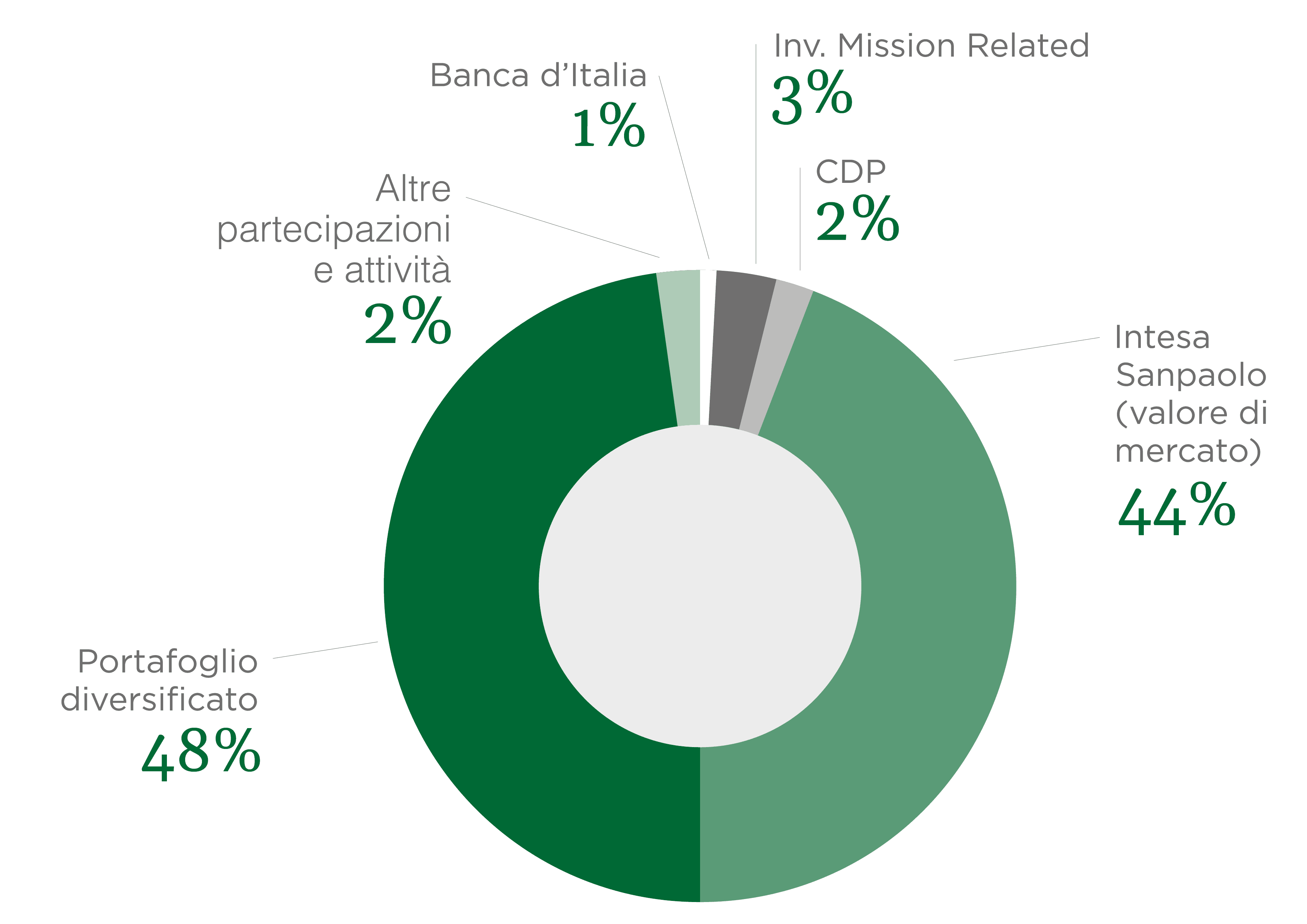
Il patrimonio è composto da investimenti diretti, che oltre alla partecipazione nella banca conferitaria, la quale pesa per circa un terzo del valore di mercato complessivo, comprendono altre partecipazioni istituzionali come Banca d’Italia e Cassa Depositi e Prestiti e investimenti in progetti legati agli obiettivi di missione (mission related investments) e da investimenti in fondi gestiti da asset managers terzi, che compongono il portafoglio diversificato sui mercati internazionali.
I fondi gestiti da asset managers terzi sono contenuti principalmente in due fondi di fondi, uno per gli asset liquidi e uno per gli asset illiquidi, gestiti da Fondaco SGR, società di gestione partecipata al 38% dalla Fondazione Compagnia di San Paolo.
Il controllo dei rischi del portafoglio è realizzato principalmente attraverso la diversificazione degli investimenti per settore, area geografica, emittente e con un’attenta valutazione delle necessità di cassa dell’attività istituzionale della Fondazione, a cui si fa fronte con la liquidità derivante dalla gestione del patrimonio. La diversificazione degli investimenti è assicurata attraverso la definizione di una Asset Allocation Strategica, elaborata con il contributo di advisor specializzati e rivista ogni tre anni, che definisce i pesi delle diverse asset class nel portafoglio diversificato, tenendo conto della composizione e capacità reddituale delle partecipazioni strategiche.
La governance del processo d’investimento è incardinata nei documenti costitutivi della Fondazione, quali Statuto, Regolamento di gestione del patrimonio e Documento attuativo del Regolamento, approvati dal Consiglio Generale della Fondazione Compagnia di San Paolo.
Un Comitato Investimenti, composto da membri del Comitato di Gestione e da esperti esterni, ha compiti di supporto e fornisce pareri all’organo di gestione della Fondazione.
La sostenibilità degli investimenti
La composizione del portafoglio
Alla fine del 2024 il valore di mercato complessivo del portafoglio di attività finanziarie detenuto dalla Compagnia di San Paolo ammontava a €10,1 miliardi. Riguardo alla composizione del portafoglio, al 31/12/2024 la partecipazione in Intesa Sanpaolo (valorizzata al prezzo di mercato al 29/12/2024) pesava per il 44% sul totale delle attività finanziarie. La parte “diversificata” del portafoglio complessivo, rappresentata dall’investimento in fondi di fondi gestiti da Fondaco Sgr S.p.A. e dalla liquidità, costituiva il 48% circa del totale; completava l’allocazione il residuo 8%, rappresentato dal portafoglio di investimenti mission related, altre partecipazioni e attività.